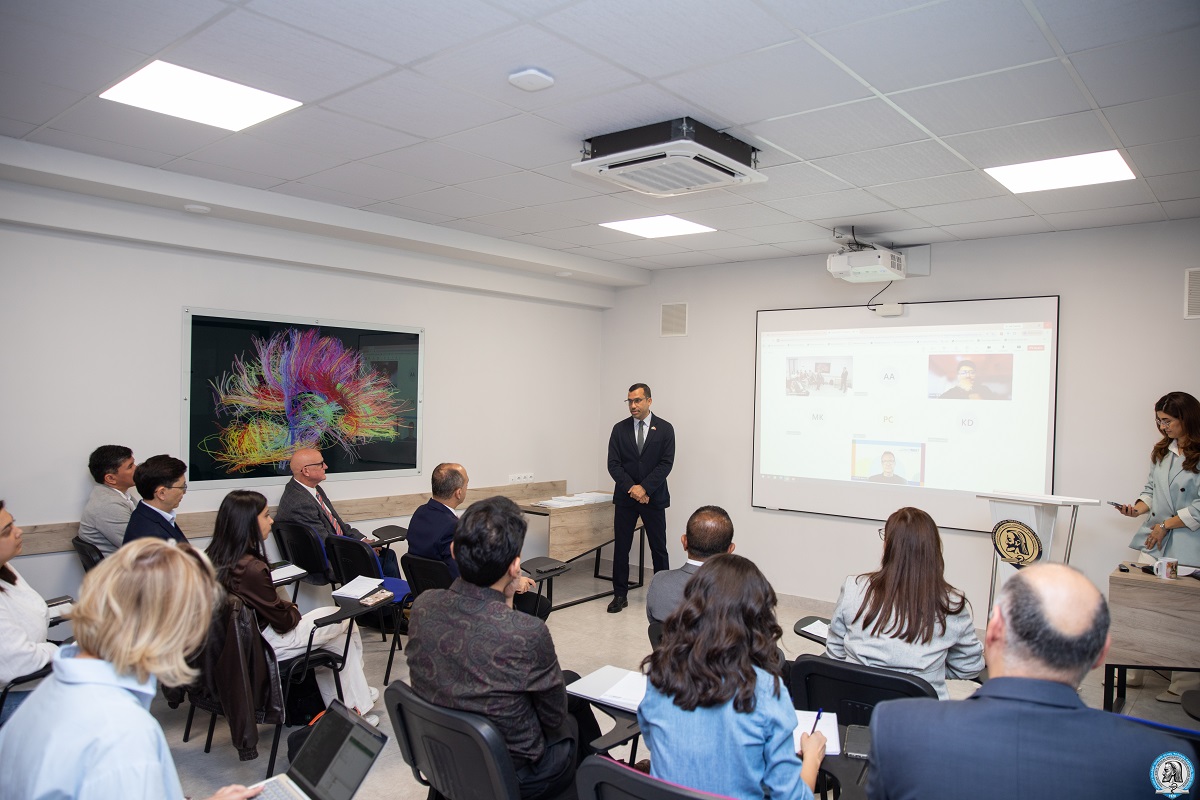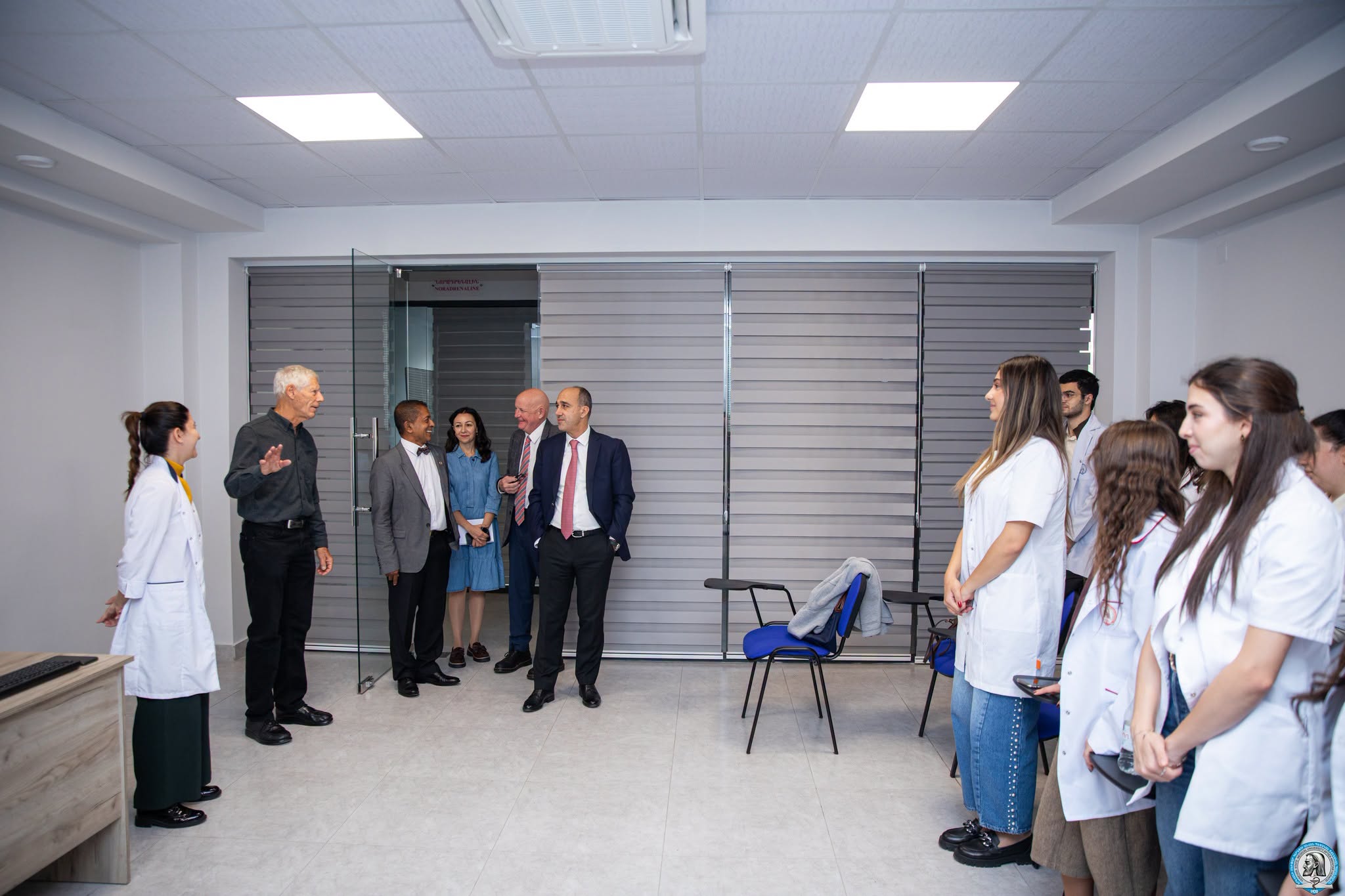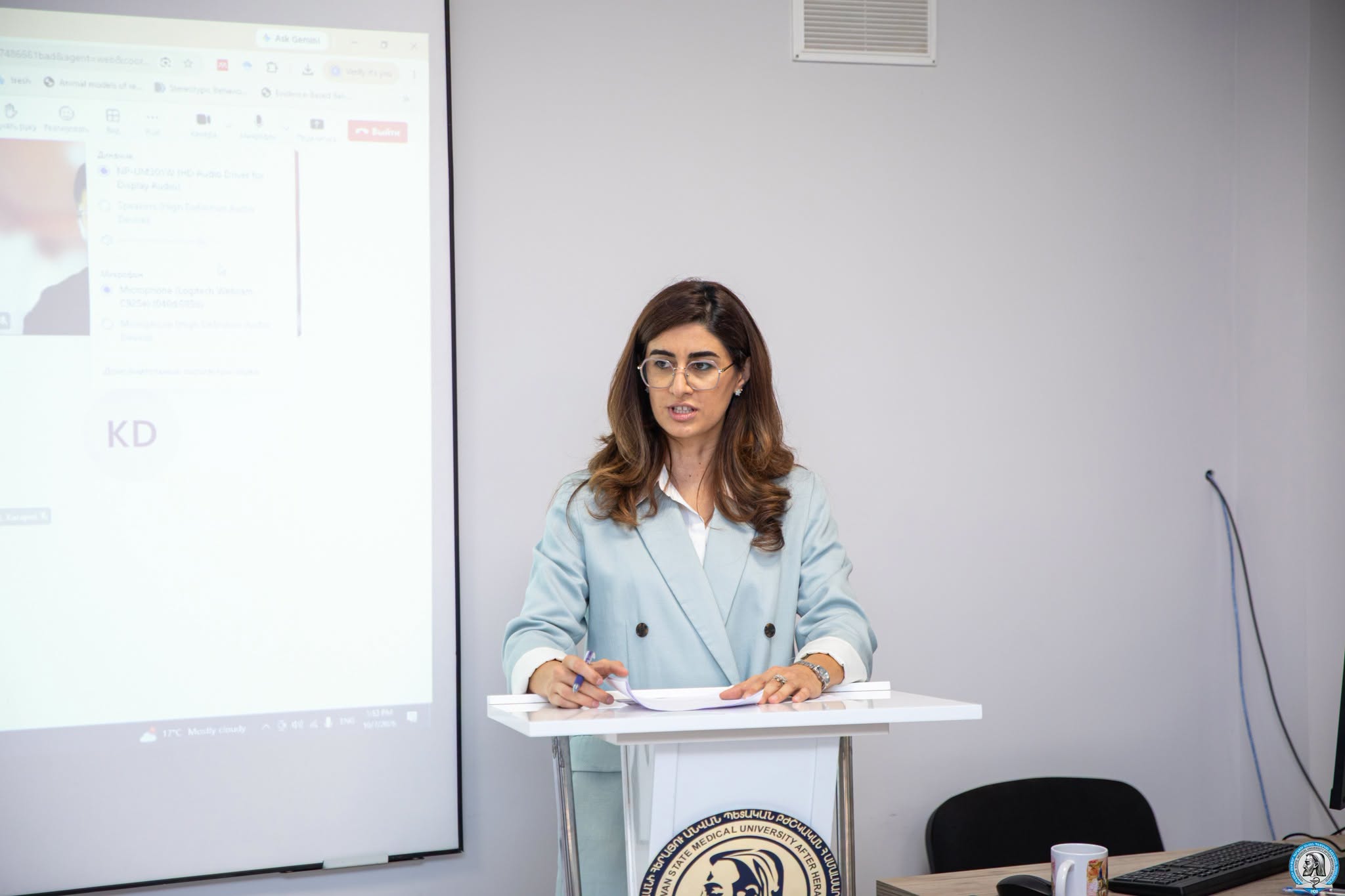
The third module of the training program “Digital empowerment at the frontlines: SORT IT (Structured Operational Research and Training Initiative) for advancing Universal Health Coverage through implementation research in Armenia, Kyrgyzstan, Kazakhstan and Uzbekistan (2026)” dedicated to Scientific Manuscript Writing started at Yerevan State Medical University after Mkhitar Heratsi, under the auspices of the UNICEF/UNDP/World Bank/WHO Special Programme for Research and Training in Tropical Diseases (TDR). The module will last for one week—from October 7 to 14.
The training program is intended for health professionals (physicians, public health specialists, pharmacists, nurses).
Professor Konstantin Yenkoyan, Vice-Rector for Science; expressed gratitude to all for coming back. “Thank you WHO Head Office in Armenia for attention and being with us especially today, and your attention to the Medical University in different aspects. In the end of this journey, we will have up to 6 publications generated by the people who are sitting here. It is the insertion of research in a real medicine”, he emphasized.
Siddhartha Sankar Datta, the Head of the WHO office in Armenia; noted that for the WHO this was indeed a great privilege to partner with YSMU within the SORT IT program and beyond that. “We sincerely think that if we can pass some knowledge, it’s a matter of knowledge transfer which then becomes what you already do in terms of practices, policies and implementation. When I was a university student, I was always struggling what is the result and what is the finding, and why the supervisor told me one day to go back and read those in the library. He did not tell me. I think that is important. And that is what I believe the mentors will tell you how to translate the project ideas into something that is publishable. I will request to all of you to think a bit beyond that publication. Something that is published and put on the shelf, does not really bring a real change. We want to see a real change happening when those findings become actions. WHO stands committed to work with the mentors, to work with the students for future research input here. And we are here to listen and then to see how we can contribute and work together in the near future”, he noted.
Rony Zachariah, Scientist for Research for Implementation at the UNICEF/UNDP/World Bank/WHO Special Programme for Research and Training in Tropical Diseases (TDR), and the Coordinator of TDR’s Structured Operational Research and Training Initiative (SORT IT); congratulated the teams from 10 countries who have actually reached this milestone. “The SORT IT initiative is unique, first, because it is focused on digital empowerment, and we have multidisciplinary team with us. As you can see, we have frontline health workers, we have policy decision makers, we have academia, and we also have medical students all of whom would work together on real world issues”, he said.
Rony Zachariah started his speech by thanking Yerevan State Medical University for hosting and cosponsoring this initiative. “It’s very meaningful to gather under an institution that is named after Mkhitar Heratsi who is, of course, the medieval medical legend of Armenia, and in many ways, the Hippocrates of Armenia. And, as you know, Heratsi lived centuries before the microscope and microbiology but yet he demonstrated certain qualities that are at the heart of operational research: observe carefully, question assumptions, analyze systematically, learn and act. Those are the same fundamental principles that are embedded in the heart of the SORT IT program. At the end of this week, we hope to have 10 publications – manuscripts that are finalized that will be published hopefully in Public Health journal along with videos and infographics to communicate better to decision makers. But within the heart of those publications we have embedded 4 key principles of SORT IT: 1. Those researches that are highly relevant and endorsed by the countries, will have an impact. 2. We are training frontline health workers who are embedded within health systems and who have direct link and influence on the health systems, so that we can make a change. 3. We are powered by partnerships. 4. And, finally, we are looking at impact because at the end, the impact is really about the change research makes to communities.
Let me conclude by saying: the work of this week is going to be very much followed by traditions of Mkhitar Heratsi – observe, question, analyze, learn and act. That was excellent medicine in the 12th century, and it is excellent for us in operational research today”, he assured.
TDR Director Marcus Lacerda who was participating in the meeting via video link said this was a very special SORT IT: for the first time the region will bring general health and implementation research together in this way. “Digital health is not the future any more, it is already a part of how health systems work, and we need to understand how to use it better, especially in the real world settings. What I like most in our SORT IT, is the mixed people in a group: we have frontline health workers, academics and medical students. This is exactly what we need to fill the gap between the public health problems and academia. I am particularly happy to see that many mentors are SORT IT alumni from Armenia and other countries, and this is how capacity strengthening should work. Actually, today we talk about capacity sharing, and not capacity strengthening.
We are meeting at the institution which is named after Mkhitar Heratsi who is remembered as one of the founders of Armenian medicine. But what I find most relevant, is his approach to use the knowledge to understand the problem and solve it. And that is very much aligned with SORT IT. AI should not be the objective, it has to be a tool to use the data that we have better. What we want is a very simple thing: we want to get the data made into evidence, and the evidence will be made action”, he emphasizes wishing to all a productive week, hoping that they challenge each other, learn from each other, and produce the work that will soon be published in a special journal issue.
Mariam Movsisyan, the Head of the Knowledge and Technology Transfer Office (KTTO) within the YSMU COBRAIN Center, noted the program brought together colleagues not only from Armenia, but also Kyrgyzstan, Kazakhstan, and Uzbekistan. It is more than a national program, it is a regional project for people who share common interest in research and evidence to improve healthcare and policy.
“It is much more than a traditional training course the strength of which align with a very practical idea: start with a real health problem for later meaning a research question, use available data to investigate it, and translate the findings into evidence that can improve healthcare, policy and programs. For physicians this is particularly relevant because many important research questions originate from everyday life: we see a problem in the hospital, we notice a pattern and then realize that something could be changed and perhaps be done differently.
For students this is something very important also because it’s an opportunity to understand that research is not separate from medicine, and the research is an essential part of a good medicine”, she assured.
The program started in February this year. The participants worked intensively with national and international mentors, and transformed their real clinical and healthcare problems into structured visible research questions and protocols.
This journey began with 10 physicians representing different areas, and also 20 students from YSMU were involved.