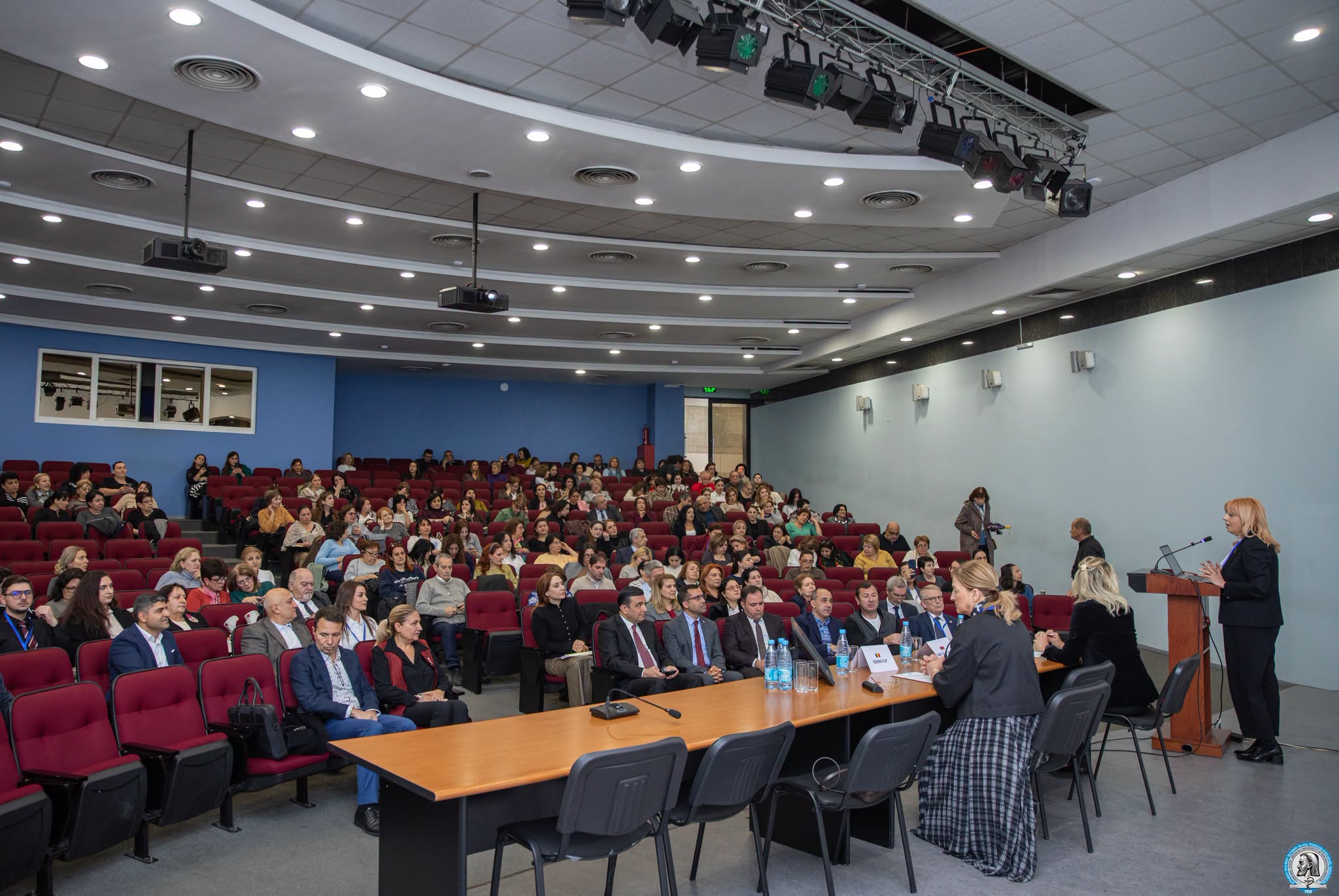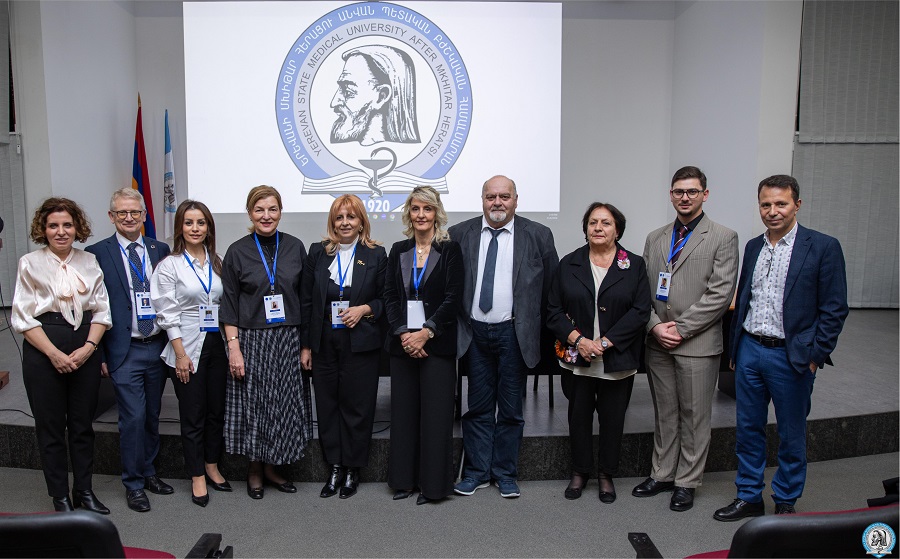
On November 6, an international conference titled “Current Trends in Antimicrobial Resistance: European and Regional Perspectives” was held at Yerevan State Medical University. The event brought together leading experts from Armenia and abroad to discuss contemporary challenges in the field of antimicrobial resistance, innovative scientific approaches, and effective strategies to overcome them.
YSMU Rector, Professor Armen Muradyan addressed the attendees with welcoming remarks: “It is an honor to welcome such a distinguished group of participants to our university. What was considered a guarantee for humanity’s salvation decades ago has today become a systemic threat to mankind. We are about to engage in an academic discussion regarding antimicrobial resistance. I am pleased to welcome representatives from the field and our professional colleagues, who will share their expertise on these pressing contemporary issues. At the heart of all this, we must consider the educational needs of the public. A key mission and mandate of our university is to equip future physicians—throughout their education—with a comprehensive, modern understanding of epidemiological issues, which they, in turn, should convey to the public as educators. In this regard, the work of epidemiologists-especially that of the university’s Department of Epidemiology—is of great importance.”
According to the Head of the university, the responsibility for raising public awareness falls within the scope of everyone’s duties. “Every individual with a medical education who works in the healthcare sector has not only the right but, more importantly, the duty to engage in public education and inform the population. Significant successes are being achieved in our country in the organization of healthcare processes; the introduction of universal health insurance, which ensures greater accessibility for the population, also brings with it a number of challenges—including those related to antimicrobial resistance. This issue should be analyzed within the professional community through the exchange of experience, with practical, actionable recommendations provided to our specialists in the academic sphere,” Armen Muradyan emphasized, wishing the participants a productive session.
Professor Mary Ter-Stepanyan, Chair of the Department of Epidemiology and Head of the “Heratsi” Analytical Center, also welcomed the participants. “It’s our great pleasure to welcome you in our university. Last year in Georgia, when we have a very excellent congress, somehow I promised that this year we will organize this conference in Yerevan”, she told expressing gratitude to the leadership of YSMU, as well as to international and local agencies for their support.
“Antimicrobial resistance (AMR) is a silent pandemic, and we all know that we can overcome this very big public health challenge only through our solidarity. No matter the field, for each conference we have three main components: content, framework, and impact. We will view content as knowledge, framework – as platform, and the most important, in my point of view, is the impact. I think, everyone from this conference will go home with impact, and we will see it in Armenian public health. This will be the biggest achievement of our collaboration”, Mary Ter-Stepanyan emphasized.
Siddhartha Sankar Datta, Head of WHO Country Office Armenia; noted that having this important event in the Yerevan State Medical University, is a perfect setting. “We really have to thank you, Rector and your team. I am extremely glad the Ministry of Health and the National Center for Disease Control of Armenia together with the Armenian and the European Associations of microbiologists and epidemiologists are being with us. For the colleagues who have joined us from abroad – welcome to Armenia.
We are all aware that antimicrobial resistance is a huge global challenge, but it is also connected with huge economic loss. WHO predicts that antimicrobial resistance would lead to 10 million deaths annually by 2050 if the current trajectory follows. Global estimates tell that the in-patient healthcare expenditure due to antimicrobial resistance will be around 66 billion every year.
With a current level of action by different member-states, the total productivity loss will be around for 443 billion every year. It is an impact on the financial pocket of every government.
AMR is a global threat today; it is a national threat today. And WHO strongly feels that this conference in Armenia is actually very good. But we also need to understand that the clock is already ticking. We have young professionals and experts in this room. It is a shared responsibility for everybody. We should not only talk about actions; we should talk about priorities”, Siddhartha Sankar Datta assured.
Armenia, through his words, has shown huge leadership in conducting nationwide point prevalent survey of the healthcare associated infections and antimicrobial use in 2025. “The World Health Organization and the Unites States Center for Disease Control are glad to be part of this work with the Ministry of Health. You will discuss these findings in details later on but let me highlight one important point for the young doctors and professionals sitting in this room: the findings show in Armenia that 74% of the antibiotics are used by the Watch Group (the Watch Group is a group that carry the higher risk of resistance), and only 15% of those antibiotics used are from the WHO recommended access. So we have a huge amount of work to do.
We heard the Rector said that the AMR has an impact not only on the health of human, it has impact on the health of animals, on the health of plants, and this all leads to erosion of trusting medicine when the antimicrobial resistance happens”, he expressed anxiety. Today’s conference, according to the Head of WHO Office in Armenia, is happening at a perfect time when our country just concluded its COP-17 Biodiversity Conference where the team of “One Health” and its interconnectedness with human, animal and environment were at the focus. “2026 theme for the World AMR Awareness week is “One Health, one action: Prevent AMR now!” And the future of medicine in Armenia, in the region and globally, and the medical profession in general depends upon how we act now” Siddhartha Sankar Datta resumed.
According to Paata Imnadze, Chairman of the Scientific Council of the NCDC (National Center for Disease Control) of Georgia, AMR is one of the immediate challenges for public health both in our two countries and globally. “Widening cooperation and sharing our experiences are so important”, he emphasized. Paata Imnadze shared how Georgia developed its national program, and what they achieved over the years. “We are open to cooperation with our neighboring countries, and we will be glad to share our knowledge, experience and technical expertise”, he added.
The welcoming remarks were followed by a professional discussion.
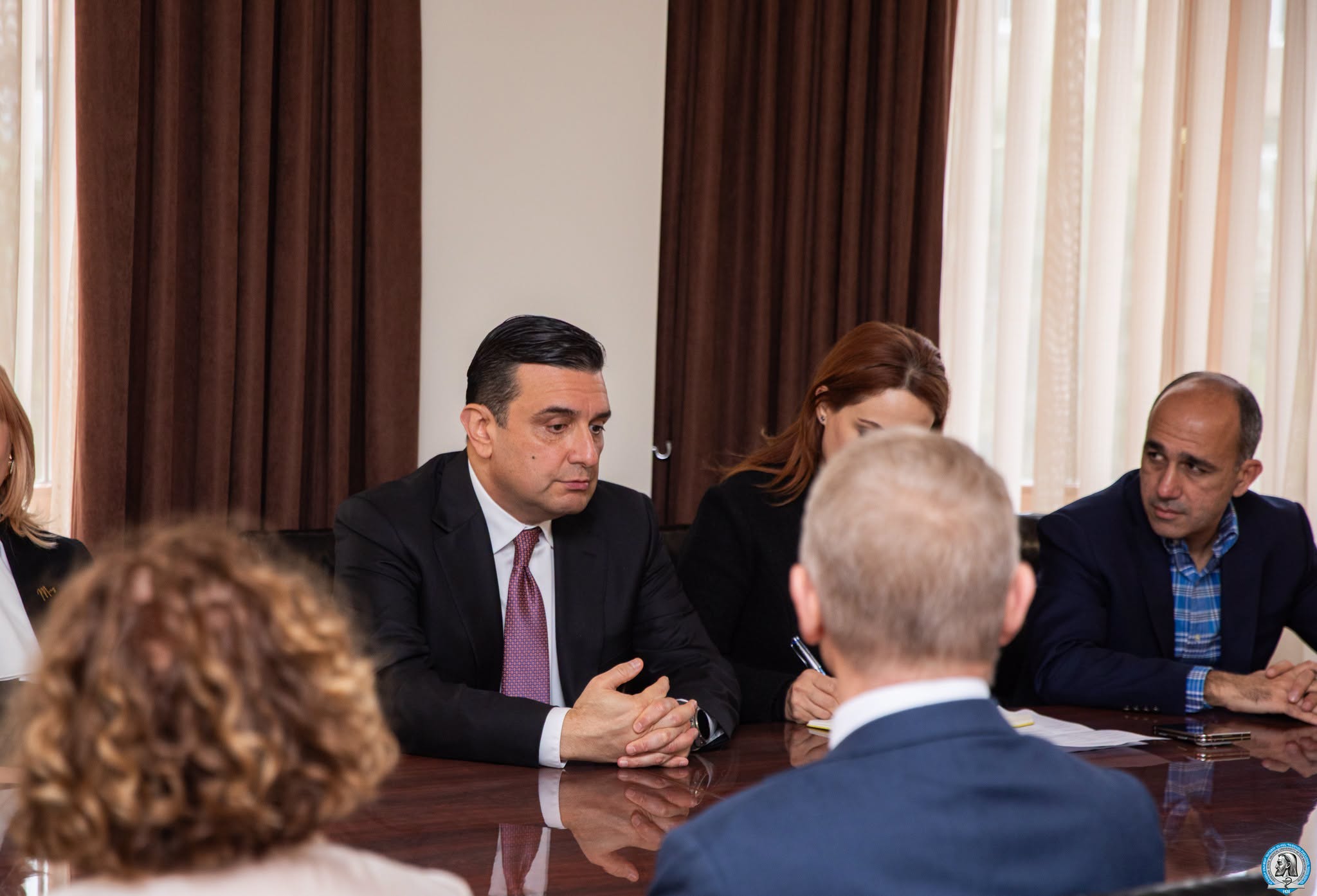
Rector Armen Muradyan hosted a delegation of leading international experts for a working meeting, during which cooperation programs and future prospects were discussed.
On November 7, a panel discussion was held on current healthcare topics: “Antimicrobial Resistance from the Perspective of Infection Prevention and Control” and “Antimicrobial Resistance in Clinical Practice: Perspectives of Infectious Disease Specialists.”