


Autism Spectrum Disorders are now the focus of attention of scientists around the world. According to the World Health Organization, s one in 160 children in the world has an Autism Spectrum Disorder
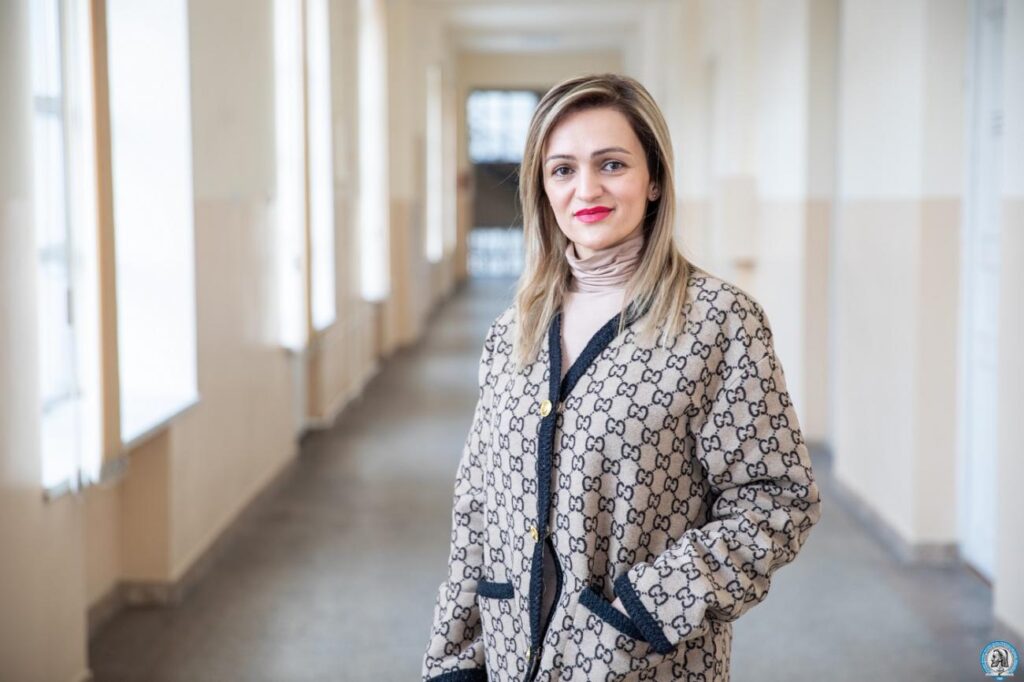
Deputy Dean of YSMU Overseas Education, the chair of normal anatomy, a postgraduate student at the Neurology Laboratory Meri Mkhitaryan decided to address this issue through an individual investigation.
The scientific supervisor of the investigation “The study and estimation of autism spectrum disorder risk factors in the Republic of Armenia, through the example of Yerevan” is the Vice- rector for Scientific Affairs and the professor of the chair of Biochemistry Konstantin Enokyan.
According to Mary Mkhitaryan, the topics of the studies in the field of neurosurgery conducted in the medical school are relevant all over the world. According to her, the problems related to nervous development, including autism, are widespread in the countries of the world.
“During the last 50 years, increasing numbers have been recorded in the world, and we can also observe those numbers in Armenia. If years ago in the world we could rarely meet children with such a problem, now cases like this have become even more popular. Maybe now such problems and cases are even more recognizable as we know about these, or maybe the diagnosis is better, in any case, the issue of health care, developmental concerns are very important, because those issues that children, and later adults have, usually have side problems as well, and disabilities in different levels.” States Ani Mkhitaryan.
“Considering the fact that the issue is not well-studied in Armenia, she decided to deal with autism spectrum disorder in Armenia, and more specifically, Yerevan in the area”.
“Similar research is being done in developing countries,” she says. “After all, there are more serious health problems. That is to say, the problems connected with development are in a slightly overlooked situation. We can say the same about Armenia. Until now, we did not have the exact number of children diagnosed with autism. In the context of research, we tried to do it with the chair of hygiene and ecology. As a result, data on 1,000 children were retrieved on a republican scale,” states Mary M. khitaryan by adding, even though the real number can be about 3 times more.
Autism Spectrum Disorder is a disorder of the nervous system, which includes a number of other sphere disorders. People with autism have impaired speech, communication, and repetitive stereo-type behavior.
According to Mary Mkhitaryan, autism spectrum disorder as a chronic health problem , is a very big emotional and financial burden for the family, for the country.
“This important problem must be studied and it is important to find the addressed solutions to the problems set before us. “It is unfortunate that no similar research has been done in Armenia yet, but it has been launched.” She speaks.
What Causes Autism
(Risk Factors)?
Despite much research being done all over the world and the fact that it is inherited, there are approximately 100 genes that are not studied which are responsible for autism spectrum disorder, says YSMU postgraduate student.
“The other series of factors are called factors of the the surrounding environment, which can be divided into pre-, for neonatal groups. Most notable Prenatal functions are as follows: Parents’ age, pregnancy, the period between pregnancies, the menstrual cycle of a woman during pregnancy, the woman’s immunity during pregnancy drug usage (in particular, antidepressants, caustic drugs, antiepileptic drugs), the metabolism of woman (diabetes, hypertension, extra weight during pregnancy) female nutritional status ( “Folic acid, iron intake, vitamin D supplement, etc.),”, says the author of the investigation. As a risk factor during pregnancy, she identifies the usage of stimulants during childbirth. We found that almost every mother used unprescribed stimulants during childbirth. These are being prescribed and used only in certain cases”, mentions Mary Kirakosyan.
According to her, other risk factors include pollution of the surrounding environment with heavy metals or air pollution due to the solvents used in the agricultural sector.
“We can not change the hereditary activity, but it can affect the risky activities of the surrounding environment, that is, these are the factors that can be changed, prevented, and conditioned to reduce the risk of developing autism. The purpose of our research is to study prenatal, perinatal, neonatal risk factors for a woman in menopause that could lead to fetal autism spectrum problems for the growth of the fetus. We are trying to understand which risk factors are widespread in Armenia, organize preventive measures and suggest corresponding solutions based on the conclusions of the research results “ details the specialist.
According to the specialist, as a result of the research, a number of newly deviated factors will be revealed. Preventive measures will be taken.
“The purpose of our research is to identify changing risk factors, and the results will provide opportunities for professional and lactational activities, which will help to reduce the increasing numbers”, concludes Mary Mkhitaryan outlining the scientific value of the research and hoping that the research will be continual.