


In the new academic year, many changes are expected in the educational process for future doctors. The most important is the transformation of the “Medical Case” educational program, as a result of which the first-year students admitted to the university this year will study in a completely new and internationally more recognizable program based on a modular format.
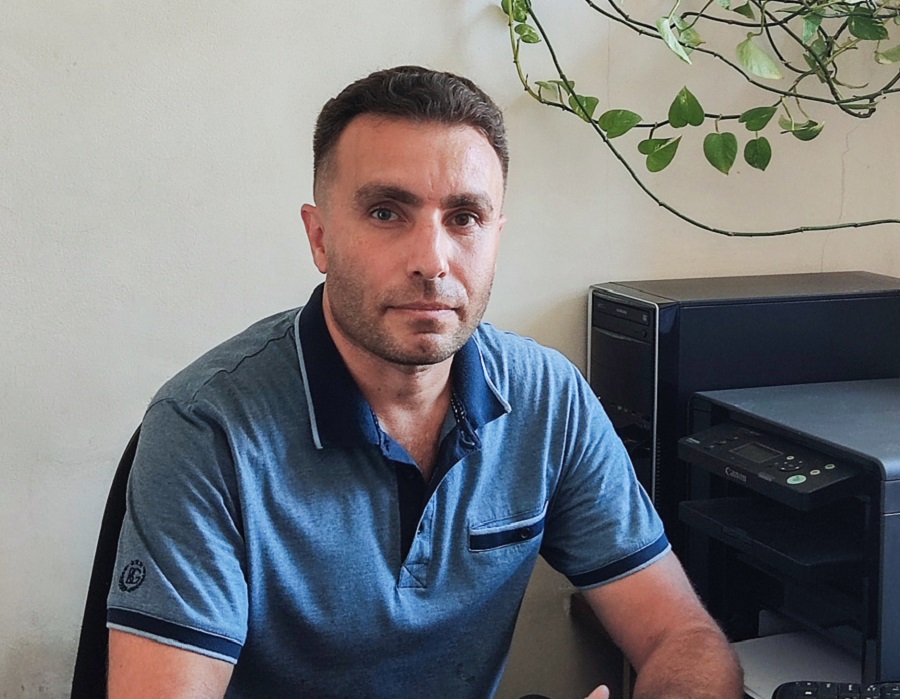
Aram Hayrapetyan, the head of the Quality Assessment and assurance center at YSMU, states that the university has chosen the right direction of development and is proceeding towards the realization of the goals and vision outlined in the strategic plan. The full interview is below.
– Mr. Hayrapetyan, what changes are expected for students this year, which are directly related to the assessment and control of the quality of education?
– First of all, I should mention that the university is in the final stage of a very important process: the “Medical Case” educational program is being prepared for international accreditation by the World Federation of Medical Education (WFME). In the last one year, the committee formed for this purpose carried out comprehensive studies and analyses of all processes of the university and the faculty of general medicine, a comprehensive report was drawn up, which will soon be available on the university’s website.
“Medical Case” educational program was also subjected to external evaluation by international experts. These studies and analyses formed the basis of a number of radical changes that will undoubtedly lead to an increase in the quality of education, the credibility of the awarded qualifications and the international recognition. If we refer to the changes taking place in the education quality assessment system, then I must highlight the separation of faculty quality assurance officers.
From now on, each faculty will have an education quality assurance officer, who will work closely with the head of the educational programs implemented in the faculty, the education quality assessment and assurance center, as well as the dean. Such an approach will allow to carry out more specific researches, to introduce the culture of quality assurance deeper into the chairs and to constantly keep a hand on the pulse of the implemented processes. As a result of digitalization of processes in the university and the implementation of the “electronic university” program, format changes of the conducted researches and questionnaires are possible, about which we will inform you in advance. We plan to expand communication with external stakeholders – alumni and employers, which will allow us to more accurately assess the effectiveness of long-term planning. Based on the experience of collecting information for the accreditation process and overcoming obstacles during the process, more systematic formats of accountability and data storage are being developed in cooperation with dean’s offices and other departments.
– What reforms, newly developed procedures or toolkits are there that have been implemented or will be implemented in the educational system in the near future?
– The reforms carried out in previous years gained new momentum during the last academic year. At the moment, one of the most prominent changes for students is the introduction of the new OSCE format for graduation certification. It is an internationally accepted form of competency assessment that not only assesses individual skills or knowledge developed by the student, but also tests clinical thinking and situational awareness. This year, the students of the faculties of general medicine and military medicine passed their graduation certification in this experimental format. In the future, it is planned to introduce such a format in the faculty of stomatology.
The introduction of the OSCE format would be an end in itself if the emphasis in the educational process were not changed in favor of practical and clinical skills development. Thus, the practice system has been radically changed, the practical skills assessment component has been introduced in all subject programs, which will make up no less than 10% of the final grade, new courses have been developed, aimed at dramatically increasing the time spent by the student in the simulation center. Many departments have already developed practical skills assessment formats, which in clinical departments will be closer to DOPS certification, etc. There are some structural changes as well.
As I already hinted, the educational programs will have leaders who will be responsible for making the educational program more modern, internationally recognizable and attractive. In cooperation with the dean, the department of academic programs and the faculty quality assurance officer, the program manager will participate in and sometimes coordinate the processes of evaluation, improvement, change planning and implementation of the educational program and individual subject programs.
I would also like to mention the “electronic university” program, which will facilitate not only administrative processes, but also lecturer-student communication, information collection, coordination of students’ independent work, etc.
However, the most important change is, of course, the modification of the “Medical Case” educational program, as a result of which this year’s first-year students will study in a completely new and more internationally recognized program based on a modular format.
Those listed were only the key changes, but there are still many surprises waiting for students, starting with new library subscriptions, ending with new opportunities for simulation exercises.
The above-mentioned changes are the result of effective and hard work of the vice-chancellors, deans, head of educational program, department of educational programs, career center and other departments operating in the university coordinating the relevant fields. However, all this would not have come true if it were not for the vision of having an internationally recognized, powerful and stable university and direct participation in all processes of the rector of the university, Professor Armen Muradyan.
– Since your department participates in the planning, development, modification and quality assurance processes of educational programs in the faculties, could you elaborate more on what changes are expected in terms of educational programs this year?
– As I mentioned, the “Medical Case” educational program underwent key changes as a result of external and internal evaluations. The changes were carried out under the coordination of Larisa Avetisyan, vice-rector for educational works, and Konstantin Yenkoyan, head of the educational program, vice-rector for scientiic affairs of YSMU. Of course, the department of educational programs, headed by Aram Baykov, also played a major role in this process.
In the new academic year, a significantly different modular educational program will be introduced in the first year.
– What does modular learning mean?
– In the case of a modular educational program, the focus is not individual subject programs, but organ-systems, areas of medicine, branches. As a result, interdisciplinary communication – horizontal and vertical integration – as well as mutual cooperation between different chairs has been significantly improved.
New optional subject programs were introduced, which are an integral part of modern medical science, modules aimed at the formation of practical and clinical skills were separated, the weight of practical components within the courses increased, more space was allocated to research skills, etc.
Of course, like any new phenomenon, a reformed curriculum cannot be without gaps, edges that need tweaking and polishing. Therefore, it will be the focus of the university’s education quality assessment and assurance system throughout its implementation and operation.
In the near future, the successful experience will be transferred to other educational programs operating at the university, which sooner or later must also undergo international accreditation.
– Summarizing the activities of your department of the previous academic year, would you tell us what problems you raised, what are the results of the surveys, what processes will follow them?
-During the previous academic year, the center for assessment and quality assurance of education carried out a number of researches, which were aimed both at the evaluation of the newly implemented processes and at providing an information base for the accreditation process. Among the researches carried out are the “Lecturer through the eyes of the student” research-survey conducted every semester, the survey aimed at evaluating the graduation certification process, as well as the availability of international grants and exchange programs, certification in the OSCE format, multi-component evaluation systems in some departments, the use of electronic educational resources, etc. related research. About 4,000 respondents participated in the conducted researches, which means that the results of the analyses are more than reliable and express the opinion of the stakeholders.
Allow me not to dwell on individual findings, specific problems raised, they are regularly published in the form of reports on the quality assurance page, sent to relevant target groups, vice-rectors coordinating the field, reported to faculty councils, as well as to the meetings of the educational methodical council. I would like to note that most of the problems raised are related to the need to increase the amount of time and resources allocated to the formation of practical and clinical skills in educational and subject programs. The changes and processes mentioned by me a little while ago are mainly aimed at solving these problems.
Ending my speech optimistically, I should mention that in the conducted surveys and research there are more structural criticisms and suggestions, positive opinions, words of thanks addressed to this or that chair or lecturer. For example, I should mention that the objectivity of the examination commissions is always highly appreciated, the change in the format of the final certification was accepted with great enthusiasm, the introduction of the research component in various subject programs was very important, etc.
If I try to summarize the results of the conducted research in one sentence, I will say that the university has chosen the right vector of development and is proceeding along the path of realizing the goals and vision outlined in the strategic plan.