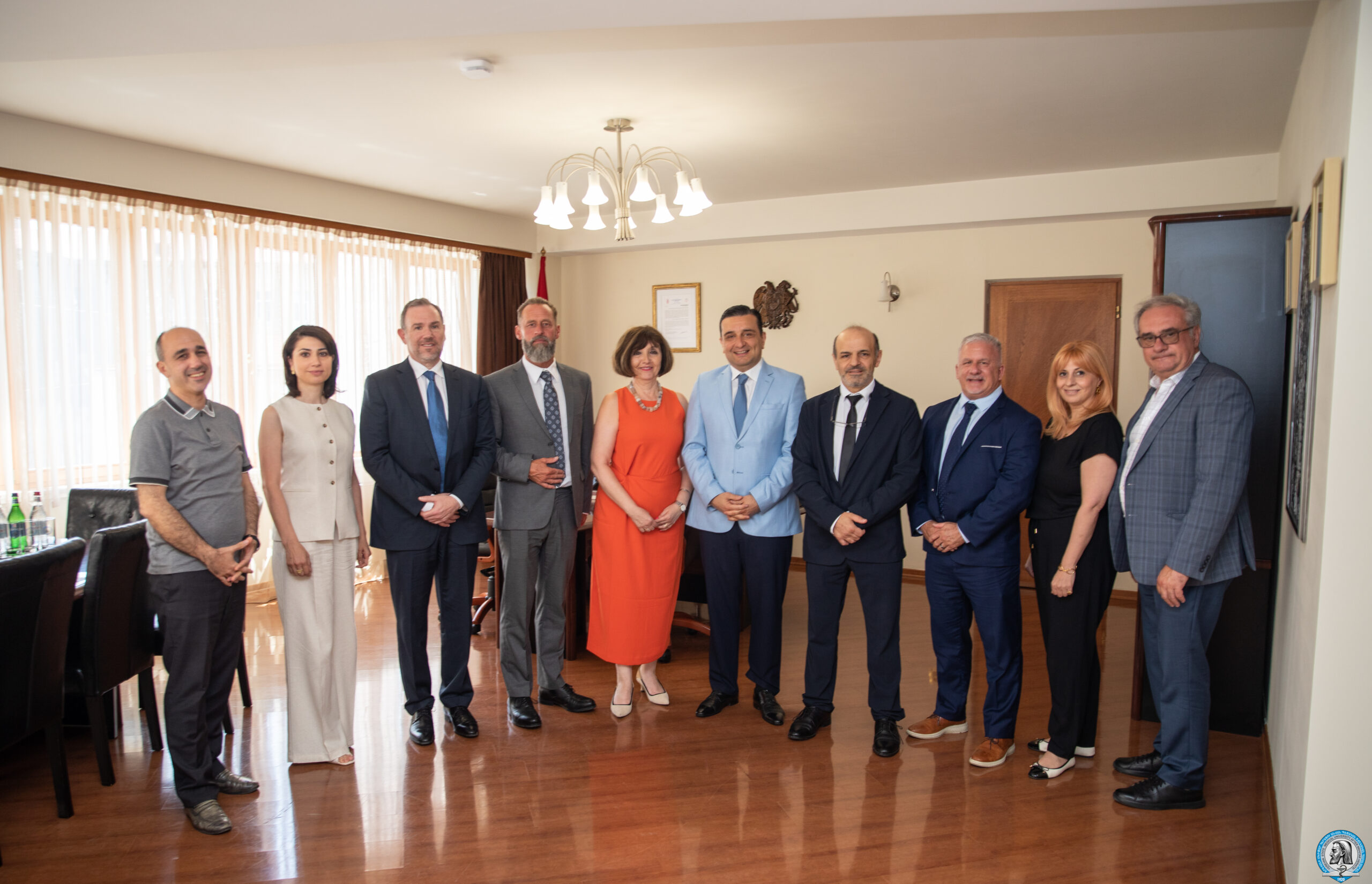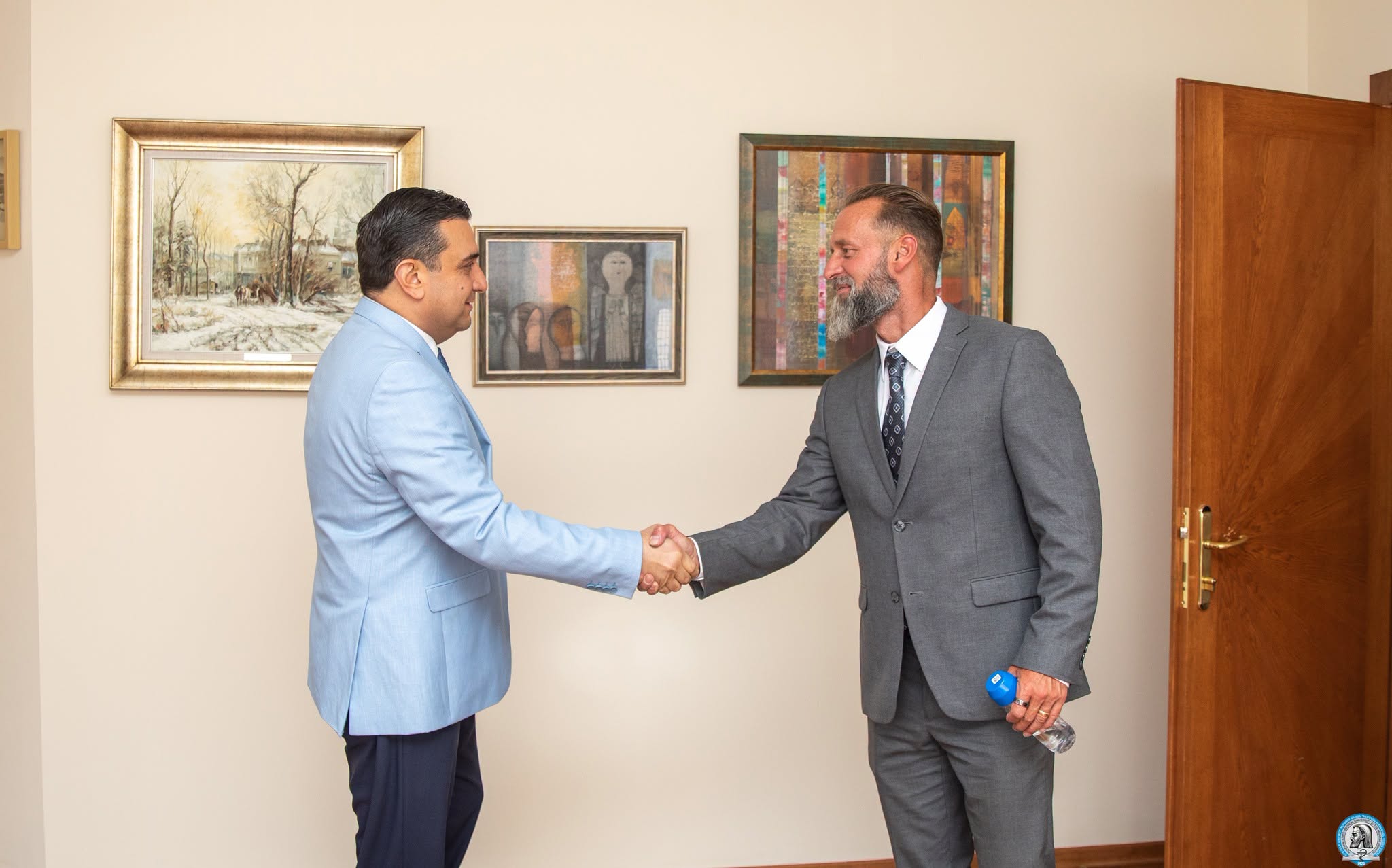
On July 6, Professor Armen Muradyan, the Rector of Yerevan State Medical University named after Mkhitar Heratsi; received a delegation of leading specialists from the United States.
Welcoming the guests, the Rector noted: “It is a great honor for us to receive such a large number of renowned specialists in the fields of healthcare and medicine. We expect that this substantive meeting will lead to long-term cooperation. This is very important for us, taking into account the new problems and challenges that the Medical University is currently facing and overcoming. After the international program accreditation, the University has a new goal – to participate in the QS ranking of universities in the world.” In addition to the well-known challenges, Armen Muradyan also suggested talking about those challenges that are of interest to everyone, in particular, artificial intelligence. He informed his colleagues that the University has already opened a corresponding chair. “We expect that we will have joint activities in the fields of artificial intelligence and data collection. This can be both in the field of fundamental medicine, and in dentistry, and in therapeutic work. It is important for us that science is an integral part of education, and that our students speak the same understandable language with scientists from around the world,” the Head of the Medical University emphasized.
The delegation of specialists from the United States was led by Vahan Simonyan, an Armenian scientist and AI and bioinformatics innovator known for his work at the U.S. Food and Drug Administration, where he served as the architect and lead scientist behind the HIVE platform (High-performance Integrated Virtual Environment). At FDA, his work focused on enabling regulatory-grade, large-scale analysis of next-generation sequencing data for applications such as pathogen detection, genomic surveillance, and evaluation of diagnostic technologies.
Expressing gratitude for the warm welcome, Vahan Simonyan emphasized: “The number one mission of our team is to make foreign experts love Armenia. The second goal is to understand how to use the intellectual potential and resources of this team to benefit Armenia. Our delegation includes experts from various fields: research in the fields of stem cells, AB technologies, addictions, dentistry, regulated epidemiology, as well as the best use of medical equipment, wound and injury regeneration, tissue healing.”
The next goal, according to him, is to create useful connections between the right and targeted people so that cooperation can grow into long-term work.
Rector Armen Muradyan identified a number of specific areas of further cooperation: big data, cutting-edge technologies, artificial intelligence. “And with these 3 tools, the main directions are fundamental medicine, epidemiology and public health, dentistry and implantology, and, of course, our everyday medicine, which we carry out in University hospitals. I would like to specifically mention nutrition – nutriciology, and drug testing, in particular – clinical trials, their legal basis. In today’s networked life, to do all this, you just need a great desire, which is evidenced by your visit today.”
The representative delegation consisted of the following specialists:
Dr. Danica Marinac-Dabic, a physician, epidemiologist, and senior leader at the U.S. Food and Drug Administration’s Center for Devices and Radiological Health (CDRH), where she serves as Associate Director within the Office of Clinical Evidence and Analysis and has led the Division of Epidemiology. Her work focuses on advancing regulatory science for medical devices through real-world evidence, large-scale clinical registries, and international data collaborations — including founding the FDA’s Medical Device Epidemiology Network (MDEpiNet) and leading global registry initiatives across orthopedic, cardiac, and vascular domains.
Dr. Jay Samuels, DDS, a clinician in the field of dentistry and implantology who has been involved in advancing biologically driven approaches to tissue healing, including the use of Platelet-Rich Fibrin (PRF). PRF is an autologous biomaterial derived from a patient’s own blood that is centrifuged to concentrate platelets, leukocytes, and growth factors into a fibrin matrix that supports wound healing and tissue regeneration.
Dr. Justin McMillen, an addiction medicine physician and healthcare leader known for integrating clinical practice with system-level innovation to expand access to treatment for substance use disorders. He has been involved in advancing models of care that combine medicine, outpatient services, and community partnerships to reach patients at critical points of need.
Dr. Jim Sevey, a medical device leader with prior experience at Medtronic, where he worked at the intersection of clinical strategy, product development, and regulatory execution. With a background that spans large multinational companies and emerging technology ventures, he brings a practical, implementation-focused perspective on how clinical evidence is generated and translated into approved, adoptable medical technologies.
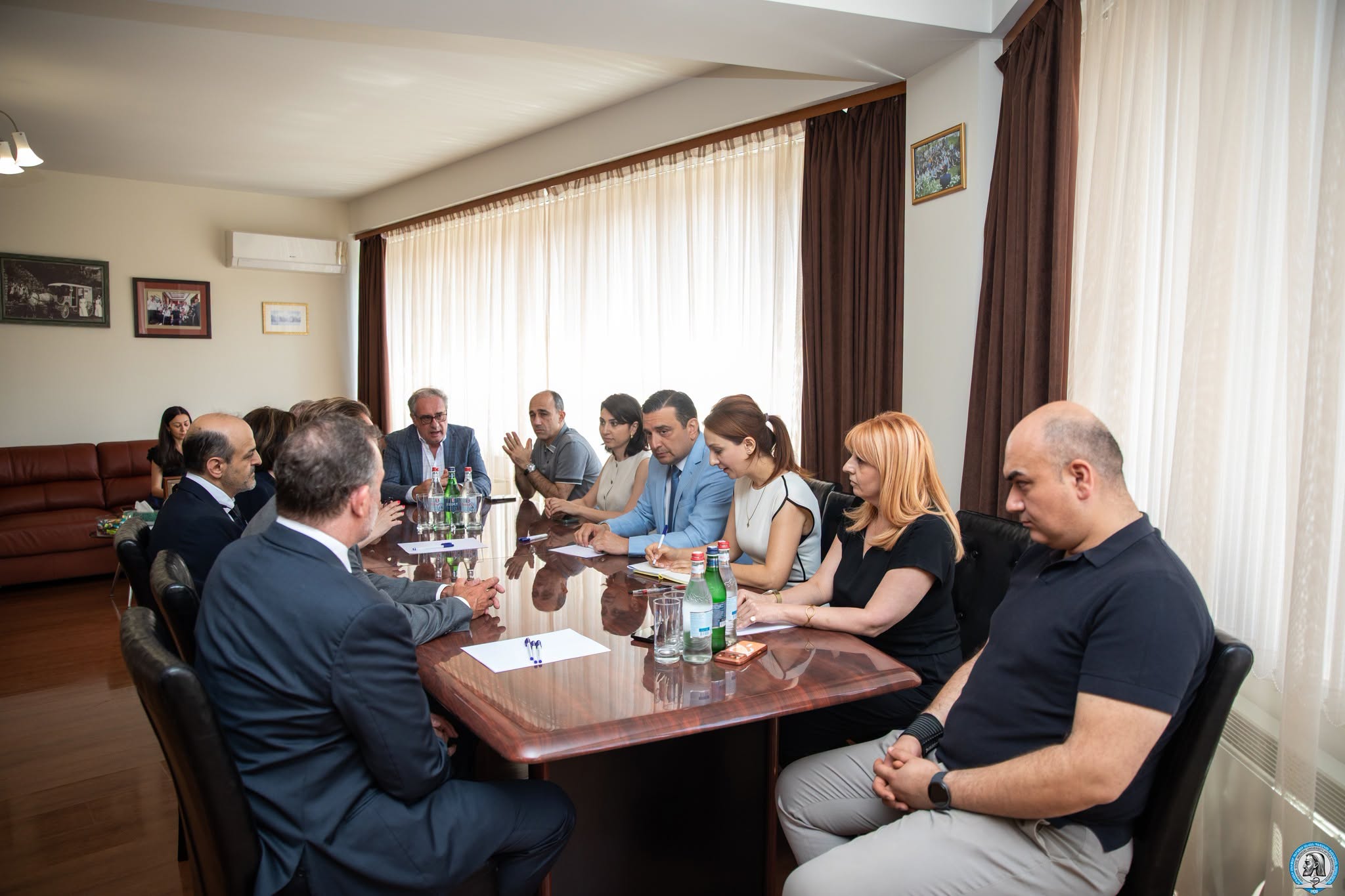
The productive meeting aimed at expanding cooperation continued in the hall of the Medical University’s Rectorate, in a more expanded format of a working discussion, during which YSMU specialists made substantive proposals for the implementation of joint projects in various aspects of healthcare.