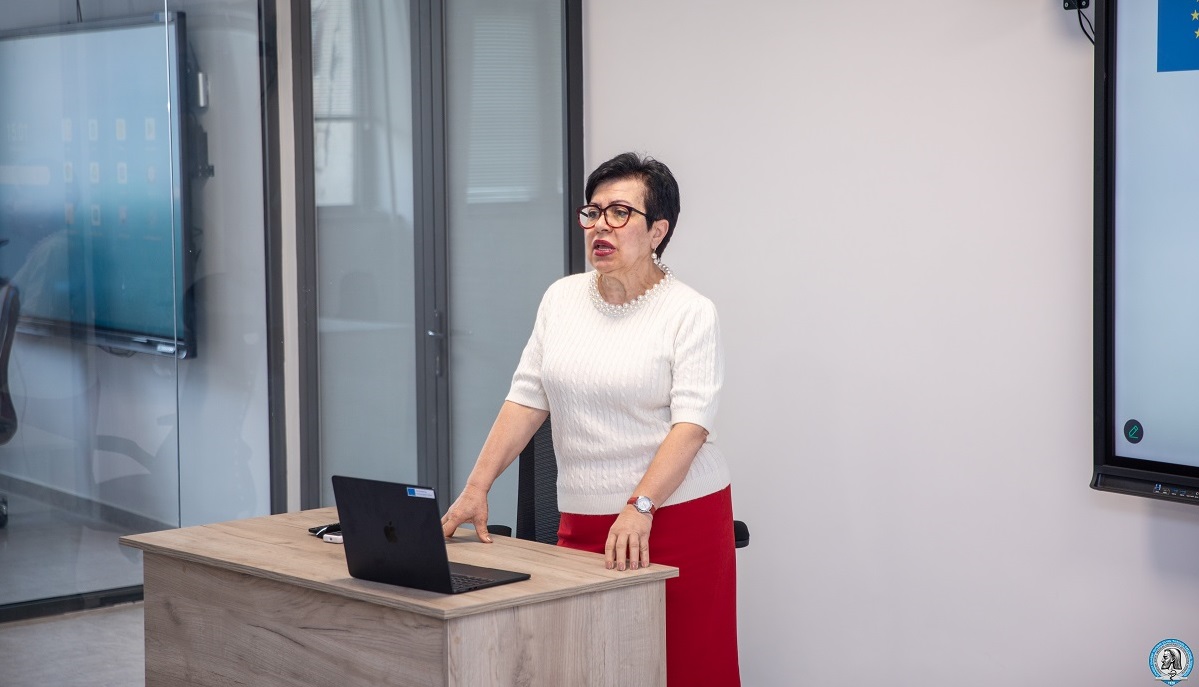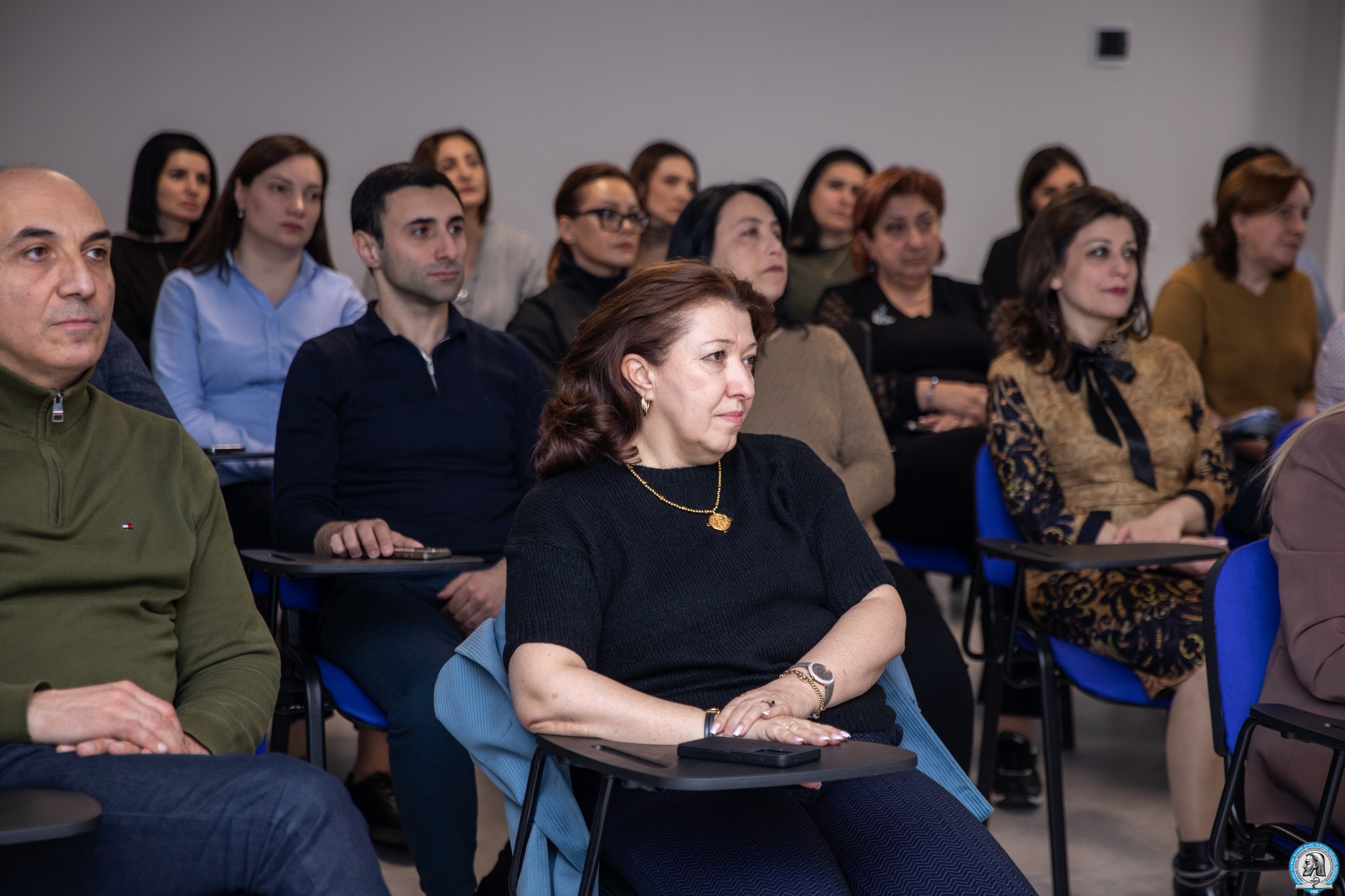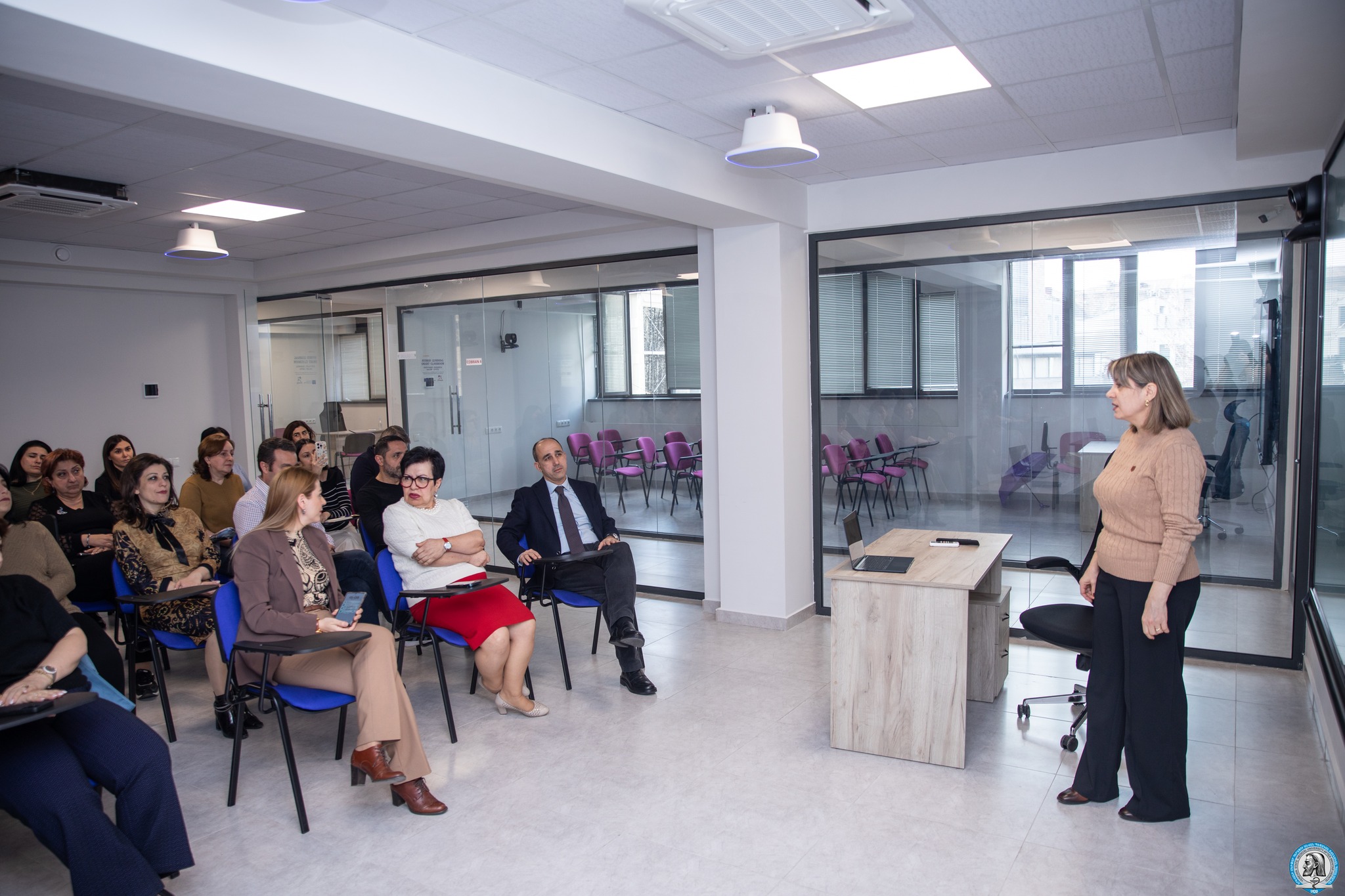
2 newly built “smart” classrooms were opened at Yerevan State Medical University after Mkhitar Heratsi, and an informational meeting was held with the participation of representatives of the teaching staff.
According to Larisa Avetisyan, Vice-Rector for Academic Affairs; the Medical University, among many programs, is participating in a very interesting grant program that will help the University organize distance education. “After the COVID-19 pandemic, the world realized that there is a great need for it, and it should be very applicable in different formats. Of course, medical education is one of the fields where this tool is not widely used, but if our teaching staff fully master the tool and use it, I think it will be very beneficial,” the Vice-Rector noted.
The project, through her words, has been operating for more than 1 year, and is working very intensively.
Anna Ghazaryan, Coordinator of the European Union grant project “e-CAMPUS: Maintaining Social Distancing and Promoting Applied Campus Education in Armenian Universities”, Head of the International Cooperation Department; briefly presented its main significance. The project was launched in December 2024, is coordinated by YSU under the leadership of Armen Budaghyan, Director of the Quality Assurance Center, and is scheduled for completion in December 2028. It is a capacity development project funded by the European Commission, which aims to develop the digital skills of the teaching staff, increase the quality of digital teaching, learning and assessment, create technologically “smart” classrooms, introduce innovative educational practices, and create a national certification program for digital teaching, learning and assessment”, she emphasized.
Konstantin Yenkoyan, Vice-Rector for Science; detailed the technological capabilities of “smart” classrooms from the point of view of organizing the educational process.
Aram Hayrapetyan, Head of the Center for Educational Quality Assessment and Assurance; presented the document “DigiComArm. Digital Competency Framework for Lecturers of the Universities of RA”, which, in turn, is based on a number of international agreements.
According to him, the mentioned document
DigiComArm’s structural design, according to Aram Hayrapetyan, includes 5 competency areas, 14 core competencies, 3 proficiency levels: basic (beginner), intermediate (active user), advanced (expert), and 42 competency descriptors.
In the near future, it is planned to organize a number of courses for the teaching staff aimed at developing their digital competencies.