


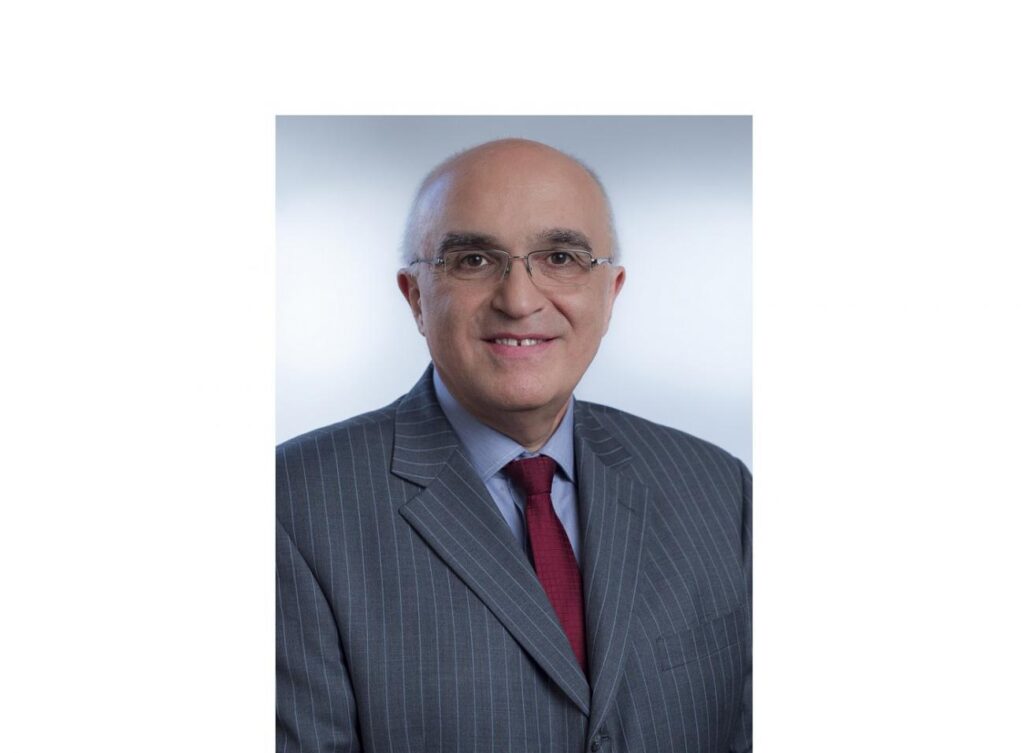
Armen Kocharian, Ph.D., DABR, MRSE, Senior Imaging Physicist at Houston Methodist Hospital and Associate Professor of Weill Cornell Medical College, is a Visiting Professor in the Department of Medical Physics at the Yerevan State Medical University and specializes in Magnetic Resonance Imaging.
In 1981, he earned his Ph.D. in Solid State Physics, Yerevan State University, Department of Physics; 1986-87 he was a visiting scientist at the University of Oslo, Norway, Department of Chemistry; 1994-1996 – visiting scientist at the University of Madison, Wisconsin, Department of Medical Physics; 1998-2002 – research fellow at the Mayo Clinic, Rochester, Minnesota, Department of Radiology specializing in MRI physics; 2011 – Diplomate of the American Board of Radiology in Radiological Medical Physics; 2019 – Diplomate of the American Board of Magnetic Resonance Safety as an MR Safety Expert.
We talked to Dr. Kocharian about his professional career, the challenges along the way, learned about his family, missing homeland, and his desire to share knowledge with future professionals.
– Professor, why did you decide to specialize in medical physics?
– After graduating from the Department of Physics, I worked at YSU for fifteen years. When the Soviet Union collapsed, I began to look for opportunities for professional development. I worked for a year at the University of Oslo in Norway as a visiting scientist. It was a profound experience for me. In 1994, I was selected to participate in a retraining program in medical physics in the United States. I worked and studied for two years at the Department of Medical Physics, University of Wisconsin. In 1996, I returned to Armenia, but medical physics was not developed in our country at that time, but I really wanted to work in my field. Two years later, I received an invitation to work in the United States, at the renowned Mayo Clinic. I became certified in Diagnostic Radiological Physics, supporting clinical practice. For the past eight years, I have been working at the Houston Methodist Hospital.
In 2018, I received an invitation to come to Armenia, and in September 2019, I gave a lecture on MRI at the YSMU.
– Please, tell us a little bit about your family.
– I grew up in a family of physicians. My father was a surgeon, Associate Professor at the Department of Surgery at the National Institute of Health, and my mother was a Neonatologist at the Margaryan Institute of Obstetrics and Gynecology. My brother followed my father’s path to become a surgeon, and is now a Senior Medical Director at a global bio-surgery company in the United States. My wife is a Neurologist. I have two daughters and do not have grandchildren yet. My eldest daughter is an epidemiologist, working for the Wisconsin Department of Health. My youngest daughter initially studied to become a classical vocalist, but then transitioned her education to business management; now she is a successful businesswoman in a large corporation.
We speak Armenian at home, trying to preserve our language and culture.
– Do you manage to relax? Please, tell us about your hobbies.
– Life in the US is difficult to compare with everyday life in Armenia․ Work life here is very challenging and intense.
In my free time, I like to read. Recently, for example, I was re-reading Ilya Ilf and Yevgeny Petrov's “Golden Calf”.
I like to travel as well.
– Are you planning to visit Armenia in the future?
– Yes, of course. We have been living in the United States for almost 30 years and try to visit frequently. We really want to visit Armenia again soon, we miss our homeland and have delayed our visit due to the pandemic. We plan to visit Armenia in September or October of this year.
– As an experienced professor, what advice would you give to your future colleagues?
– Medical Physicists play an important role in diagnostic imaging, supporting clinical practice, and providing the link between technologists and radiologists. The MR imaging systems are complex, and the role of the physicist is crucial.
I am happy with my profession. Magnetic Resonance Imaging is a fast-growing, exciting, but at the same time quite challenging field: you have to really love it. I am always available and ready to help future specialists in this field.
Author: Tatevik Ghazaryan